

.svg)
.svg)
.svg)
.svg)
For many people, the path to pregnancy does not go as planned. In fact, infertility affects about 1 in 6 people worldwide at some point during their reproductive years. As researchers continue to explore new ways to support fertility, treatments such as intraovarian platelet-rich plasma (PRP) injections have gained attention for their potential to help certain patients with diminished ovarian reserve or poor ovarian response.
While this treatment is still considered investigational, it has sparked interest among both patients and fertility specialists. In this article, we'll explain how intraovarian PRP works, who may be a candidate, what current research says, and what you should know before meeting with the best intraovarian PRP injection specialist in Los Angeles.
What Is an Intraovarian PRP Injection and How Is It Supposed to Work?
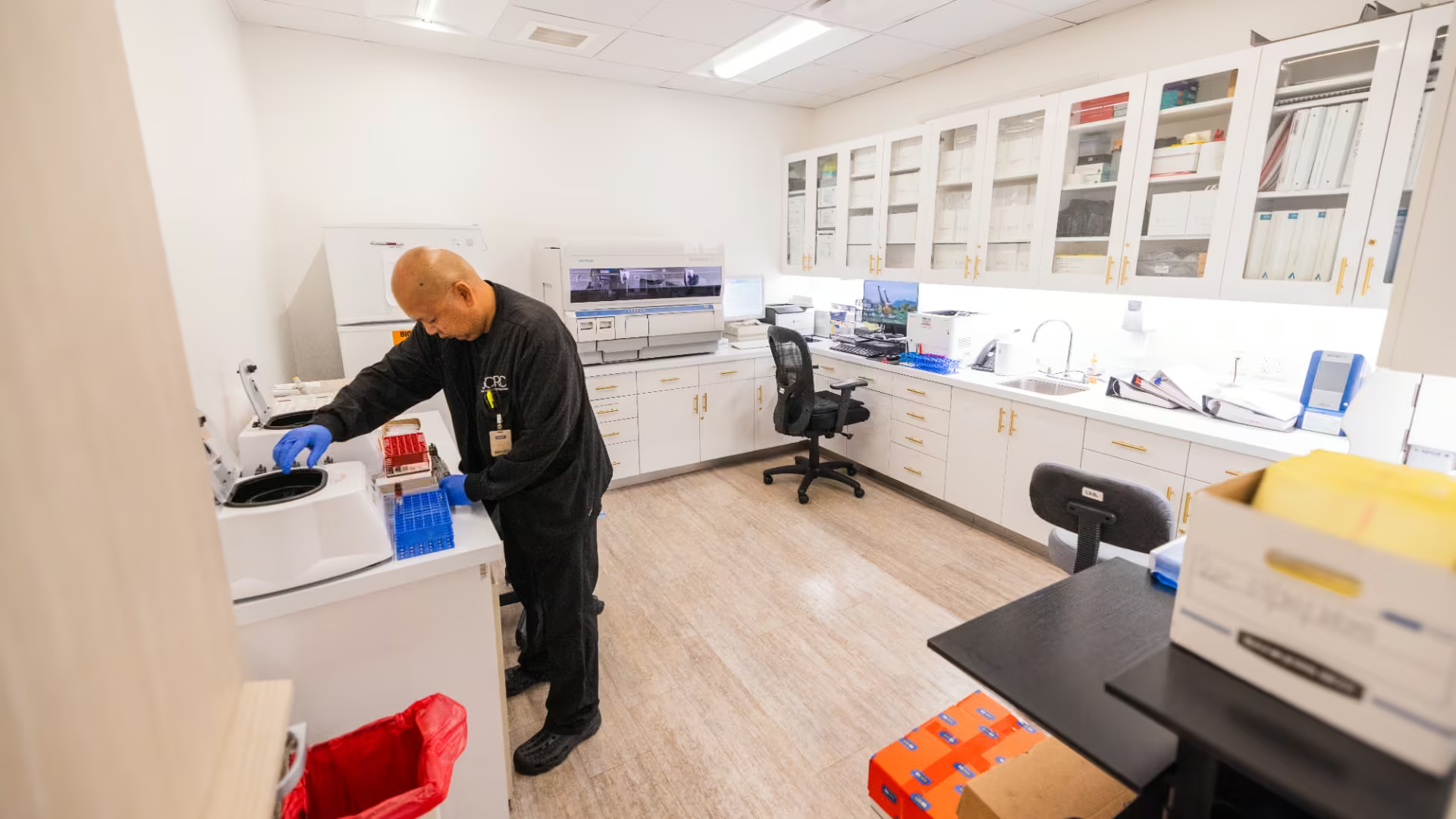
Platelet-rich plasma, or PRP, comes from your own blood. During treatment, a provider draws a small blood sample and places it in a centrifuge, which separates the platelets from the other blood components. Those platelets contain growth factors that help support the body's natural healing processes.
For an intraovarian PRP injection, a fertility specialist injects the concentrated PRP directly into the ovaries using ultrasound guidance. Researchers believe these growth factors may help improve the ovarian environment, though they continue to study exactly how this process works and which patients may benefit the most.
It's important to understand that ovarian PRP differs from established fertility treatments. While early studies have shown promising results in some patients, experts still consider ovarian PRP an investigational therapy. Researchers continue to evaluate its safety, effectiveness, and long-term outcomes before it can become part of routine fertility care.
Who May Be a Candidate for an Intraovarian PRP Fertility Treatment?
No single fertility treatment works for everyone. Before recommending intraovarian PRP for fertility, your doctor will consider your medical history, age, hormone levels, ovarian reserve testing, previous fertility treatments, and long-term family-building goals.
While every patient's situation is unique, the table below highlights some examples of when intraovarian PRP may be considered and when other fertility treatment options may be more appropriate.
This table provides a general overview rather than a diagnosis. Every fertility journey differs, and several factors influence whether intraovarian PRP makes sense for your situation. A comprehensive fertility evaluation allows your specialist to determine whether PRP fits into your treatment plan or whether another approach offers a better chance of success.
Does Ovarian PRP Work? What Current Research Says
This is often the first question patients ask, and the answer requires some balance.
Several early studies suggest that intraovarian PRP may improve ovarian reserve markers or help some patients respond better during IVF treatment. Researchers have also reported encouraging results in select women with diminished ovarian reserve. These findings have created excitement because they point toward the possibility of improving ovarian function in carefully selected patients.
At the same time, researchers have not yet reached a clear consensus. Current studies remain relatively small, and many use different treatment methods and patient populations. Scientists still need larger clinical trials to determine which patients benefit most and whether PRP consistently improves pregnancy or live birth rates.
For now, most fertility specialists view intraovarian PRP as one possible option within a broader fertility treatment plan rather than a guaranteed solution. Setting realistic expectations remains just as important as understanding the potential benefits.
What Should You Expect During and After an Intraovarian PRP Injection?
If you decide to move forward with intraovarian PRP, knowing what to expect can help you feel more prepared. An intraovarian PRP procedure typically involves:
- Comprehensive fertility evaluation: Your specialist reviews your medical history, fertility goals, imaging, and hormone testing to determine whether PRP may be appropriate.
- Blood collection and PRP preparation: A small blood sample is collected and processed to concentrate the platelets.
- Ultrasound-guided injection: Your provider injects the PRP into the ovaries using imaging guidance for accuracy.
- Ovarian PRP recovery: Most patients experience minimal downtime and return home the same day. Mild cramping or spotting may occur for a short time.
- Follow-up care: Your specialist monitors your progress and discusses whether additional fertility treatment or IVF may follow based on your individual plan.
Because every patient's reproductive health differs, your timeline and next steps may not look exactly like someone else's. Your fertility specialist will recommend the approach that best supports your specific goals.
Why Choose the Best Intraovarian PRP Injection Specialist in Los Angeles?
Intraovarian PRP is still an emerging fertility treatment, and it may not be appropriate for every patient. Understanding how it works, who may be a candidate, and what current research shows can help you have a more informed conversation about your fertility options. A personalized evaluation is the best way to determine whether PRP fits into your treatment plan or whether another approach may make more sense.
Dr. Matthew Siedhoff brings more than 15 years of experience in complex gynecologic and reproductive surgery to his Beverly Hills practice. He earned his medical degree from Stanford University, completed his OB/GYN residency at New York University, and pursued fellowship training in Complex Benign Gynecology and Minimally Invasive Gynecologic Surgery at the University of North Carolina at Chapel Hill. His research focuses on reproductive surgery, and he has published more than 100 manuscripts in peer-reviewed medical journals. He has also held leadership roles at UNC and Cedars-Sinai and continues to teach surgeons nationally and internationally.
If you are exploring intraovarian PRP or looking for the best fertility surgeon in Los Angeles to help you understand your options, schedule a consultation with Dr. Siedhoff today.
.svg)