

.svg)
.svg)
.svg)
.svg)
For many people, the path to pregnancy begins with excitement and hope. But for some, unexplained pain or months of trying without success turn that hope into worry. Endometriosis is a condition where tissue similar to the uterine lining grows outside the uterus. It’s also one of the leading causes of infertility, affecting an estimated 30% to 50% of women who struggle to conceive.
Continue reading to learn how endometriosis affects fertility, what your fertility treatment options are, and when it’s time to see the best fertility surgeon in Los Angeles.
Endometriosis and Fertility: What to Know if You’re Trying to Conceive
Endometriosis can feel like an invisible barrier that can turn a simple dream of starting a family into a long and confusing journey. Although many people with mild or moderate endometriosis still conceive naturally, research shows that up to 50% of women with infertility also have endometriosis, showing just how deeply this condition can affect the reproductive system. How much endometriosis impacts your fertility depends on how advanced it is, and other factors like maternal age or the presence of other conditions that affect fertility, like PCOS.
How Does Endometriosis Impact Fertility?
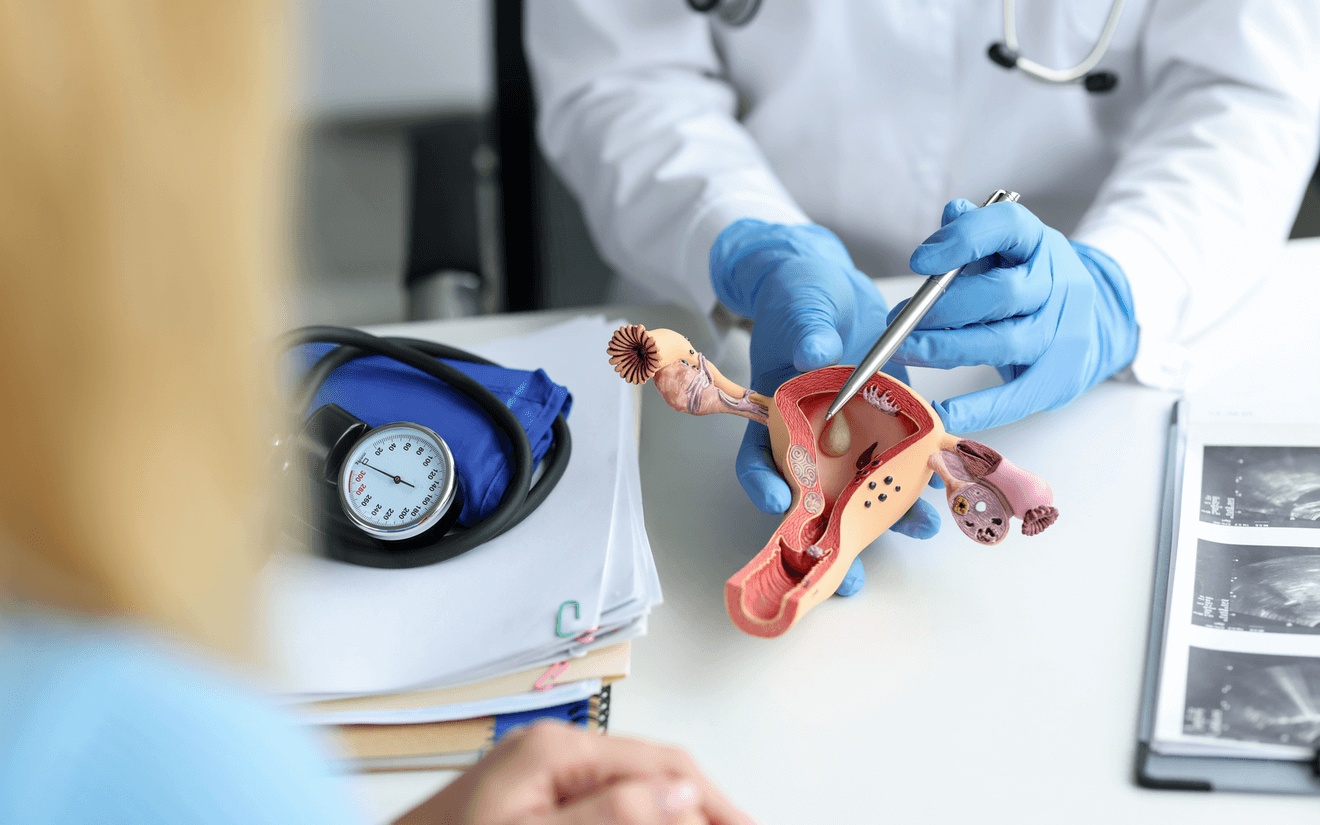
When scar tissue forms around the ovaries or fallopian tubes, it can block eggs from meeting sperm or create inflammation that makes the uterine environment less welcoming for implantation. In severe cases, as the endometrial tissue grows, it can form adhesions that pull on nearby organs, twisting or blocking the fallopian tubes and changing the shape of the pelvis. These physical changes can make it even harder for an egg to travel, or for sperm to reach it. In some cases, cysts called endometriomas grow on the ovaries, taking up space where healthy eggs should develop.
Does Endometriosis Always Cause Infertility?
Not every case of endometriosis affects fertility in the same way, which can make it hard to predict what someone might face. The severity and stage of the disease often play the biggest role.
Those with advanced endometriosis, classified as Stage III or IV, are more likely to experience infertility because scar tissue, cysts, and adhesions become more extensive and disrupt how the ovaries and fallopian tubes work together. When endometriomas grow on the ovaries or when lesions burrow deep into surrounding tissue, the pelvic organs can become tethered in ways that limit movement or block pathways needed for conception.
Maternal age and egg supply add another layer to the picture, since a lower ovarian reserve or prior surgeries can make it harder to recover fertility even after treatment. Sometimes the issue isn’t only with the endometriosis itself, but also with other factors like a partner’s sperm quality or preexisting tubal damage.
Fertility Treatment Options for Endometriosis-Related Infertility
For people trying to conceive with endometriosis, fertility treatment often becomes a mix of patience, timing, and medical strategy:
- Surgery can remove thick or excessive endometrial tissue or drain ovarian cysts to free up space around the ovaries and tubes and give eggs and sperm a clearer path to meet.
- Intrauterine insemination (IUI) or in vitro fertilization (IVF) can bypass the physical barriers if surgery is unsuccessful or if you want to avoid surgery.
- Egg freezing or starting treatment sooner rather than later is often recommended because endometriosis can slowly reduce egg supply over time.
Women often find the best and most effective care comes from a fertility specialist who is also an endometriosis expert who can treat symptoms and address the obstacles that stand in the way of pregnancy at the same time.
What to See an Endometriosis Expert
Knowing when to ask for help can be one of the hardest parts of the fertility journey, especially when living with endometriosis. Answers to questions like “How long should we keep trying on our own?” or “Could surgery make a difference?” are unique to each case, but as a general rule of thumb, those who have been trying for six to twelve months without success, or if you’re over thirty-five, should consider seeing a fertility specialist as soon as possible.
Fertility Hope for Those with Endometriosis
Living with endometriosis while trying to conceive can feel like a constant balance between hope and uncertainty, yet many people with this condition do go on to have healthy pregnancies. It helps to focus on what can be controlled, even when so much feels unpredictable:
- Taking care of your overall health. Eating well, keeping a steady weight, managing stress, and avoiding tobacco can all support your body’s natural fertility.
- Tracking ovulation and timing intercourse can also make a difference, especially when every cycle can be different.
- The waiting, the doctor visits, and the what-ifs can weigh heavily, which is why talking with a counselor or joining a support group can bring relief and perspective. It can remind you that you’re not alone in this.
Lastly, understand that there’s a real reason for optimism. Ongoing advances in minimally invasive surgery, fertility treatments, and endometriosis research are giving people with this condition more options than ever before.
Finding the Best Fertility Surgeon in Los Angeles
For someone trying to conceive, endometriosis can feel like an uphill climb. At our Beverly Hills practice, we work to restore hope through the skilled care of Dr. Matthew Siedhoff, a nationally recognized gynecologic surgeon whose expertise in fertility-sparing endometriosis surgery has helped countless women reclaim their reproductive health.
Dr. Siedhoff approaches each case with precision and empathy, using minimally invasive techniques that preserve healthy tissue and give patients the best chance for conception. From complex excision procedures to fertility-focused treatment planning, our goal is to help you move forward with confidence, knowing your care is guided by one of Los Angeles’s most trusted specialists in endometriosis and fertility.
Ready to take the next step in starting or expanding your family with help from the best fertility surgeon in Los Angeles?
.svg)